01 Overview
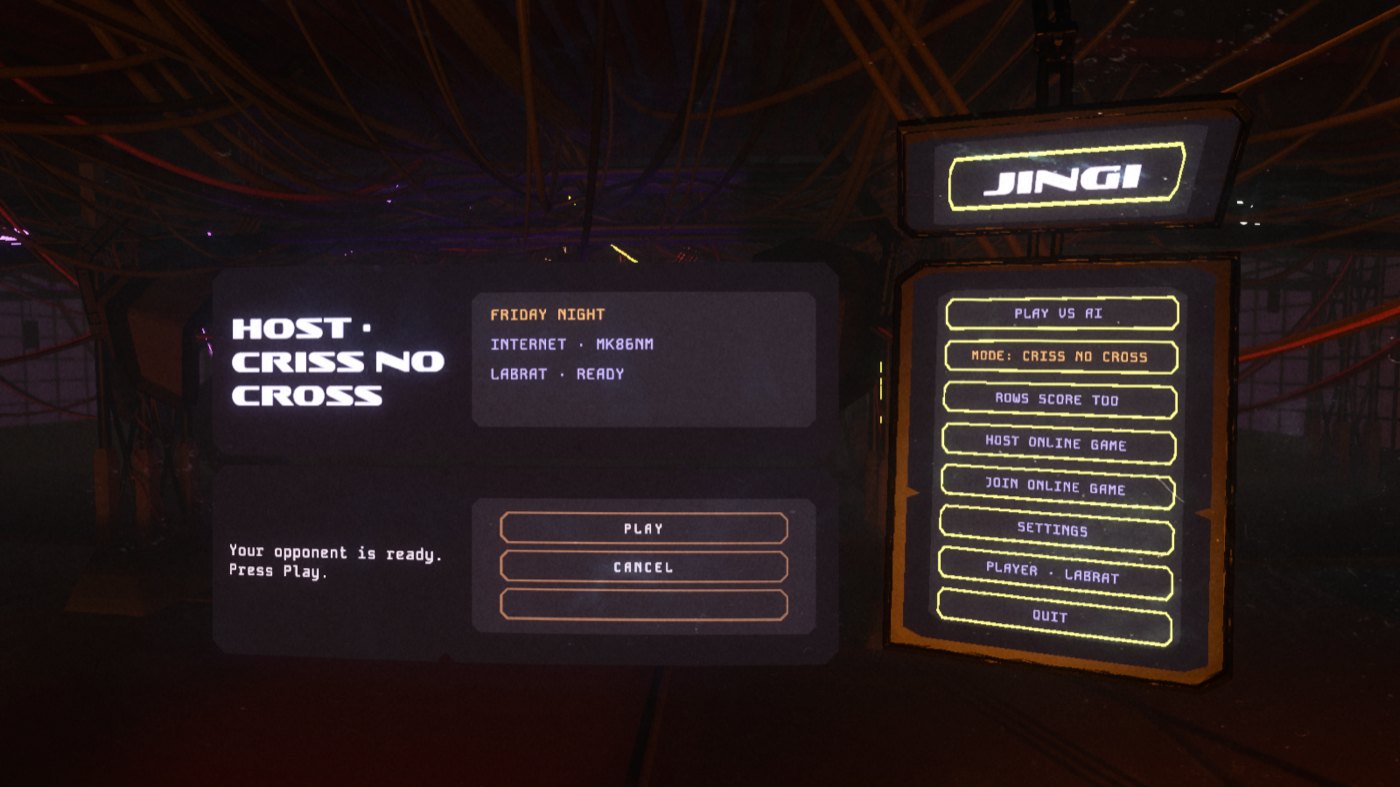
JINGI is a playable prototype of a digital dice game based on a variant of Knucklebones, built in Unity. On this project I was responsible for the interactive systems and the complete sound design — I am a co-author of both the code and the audio.
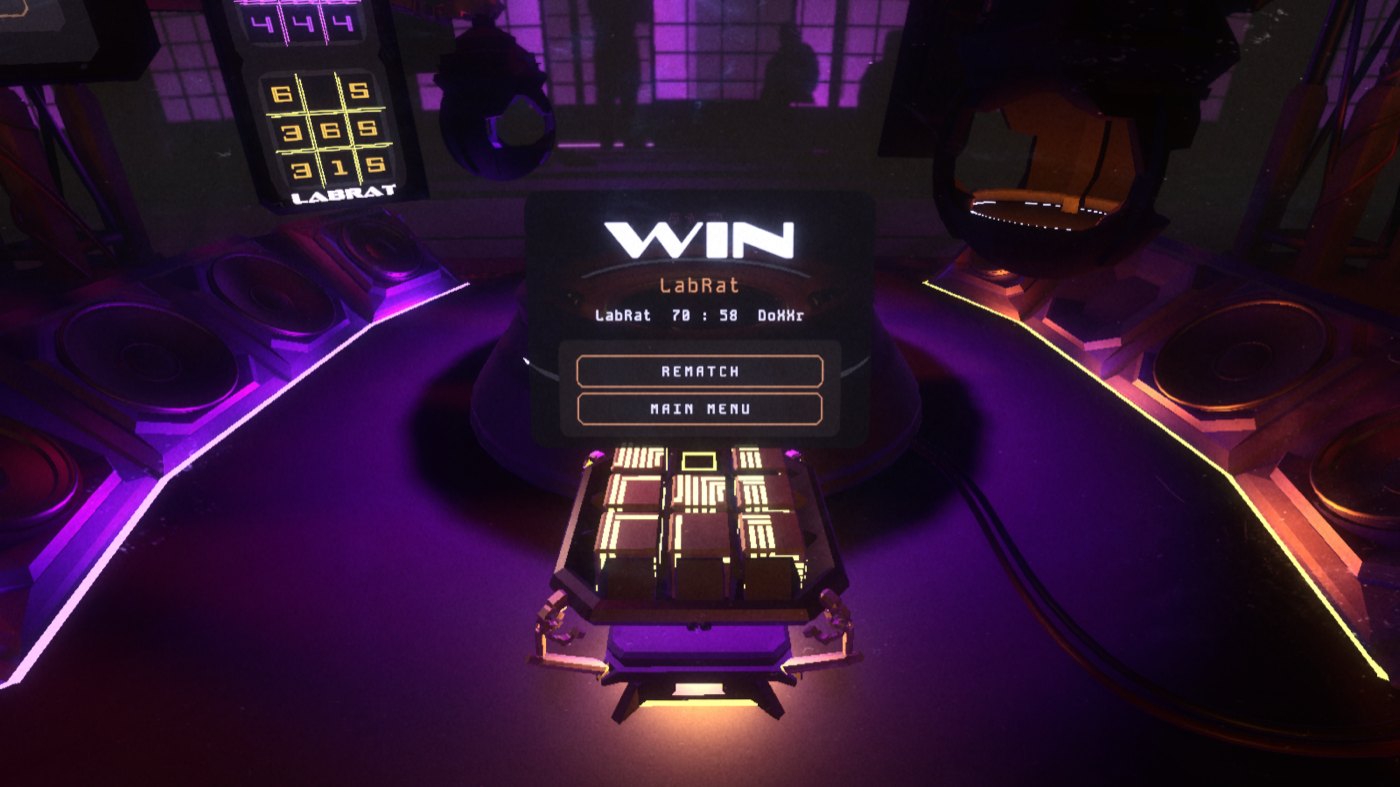
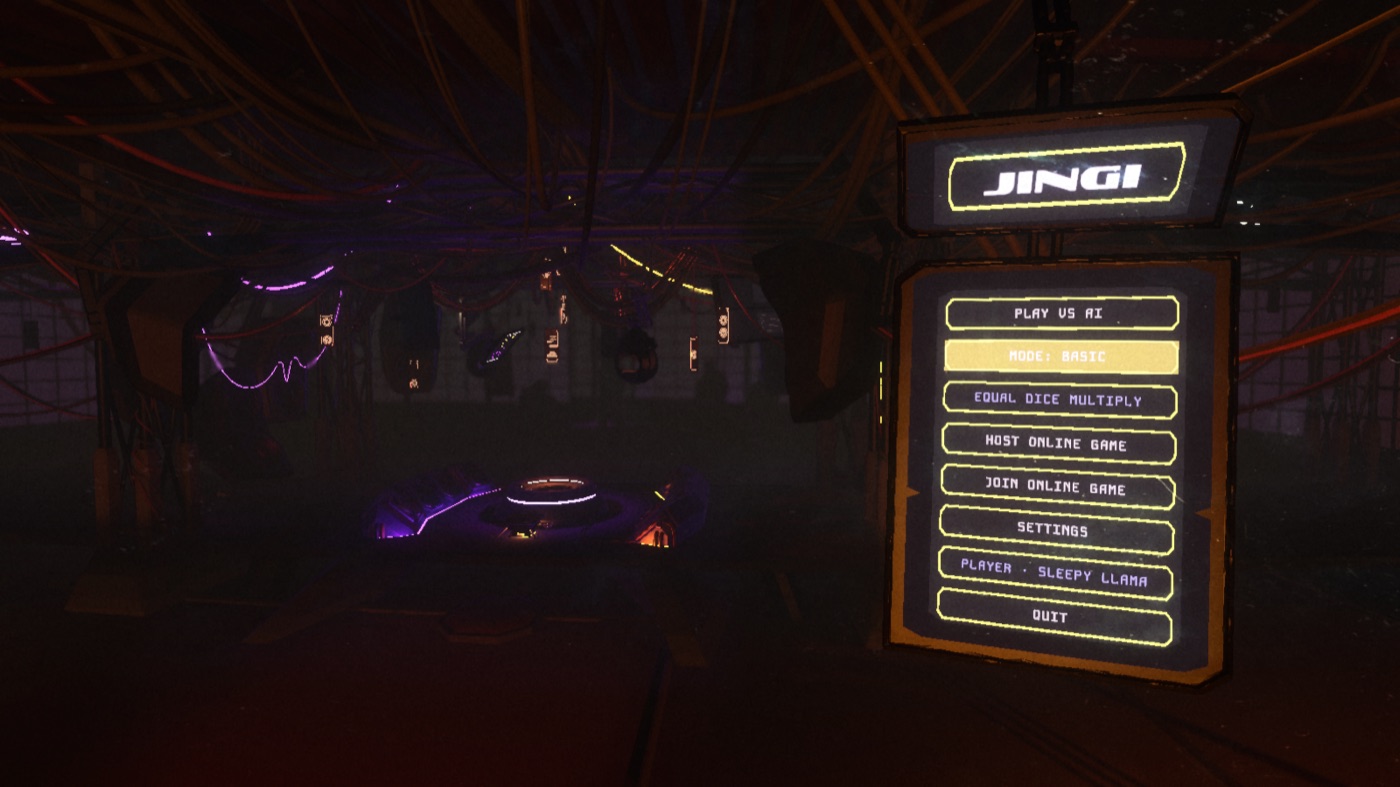
The project was a collaboration with the artist Nicolas Farrington-Douglas (alias Nx-LabRat), who created the 3D environment and defined the visual language of the work. My role was to program the interactive part and to design and implement the audio. Building the system architecture with AI-assisted development meant it came together within a week, which freed up time to invest in a genuinely distinctive sound design pass rather than a generic one.
02 Visual Language
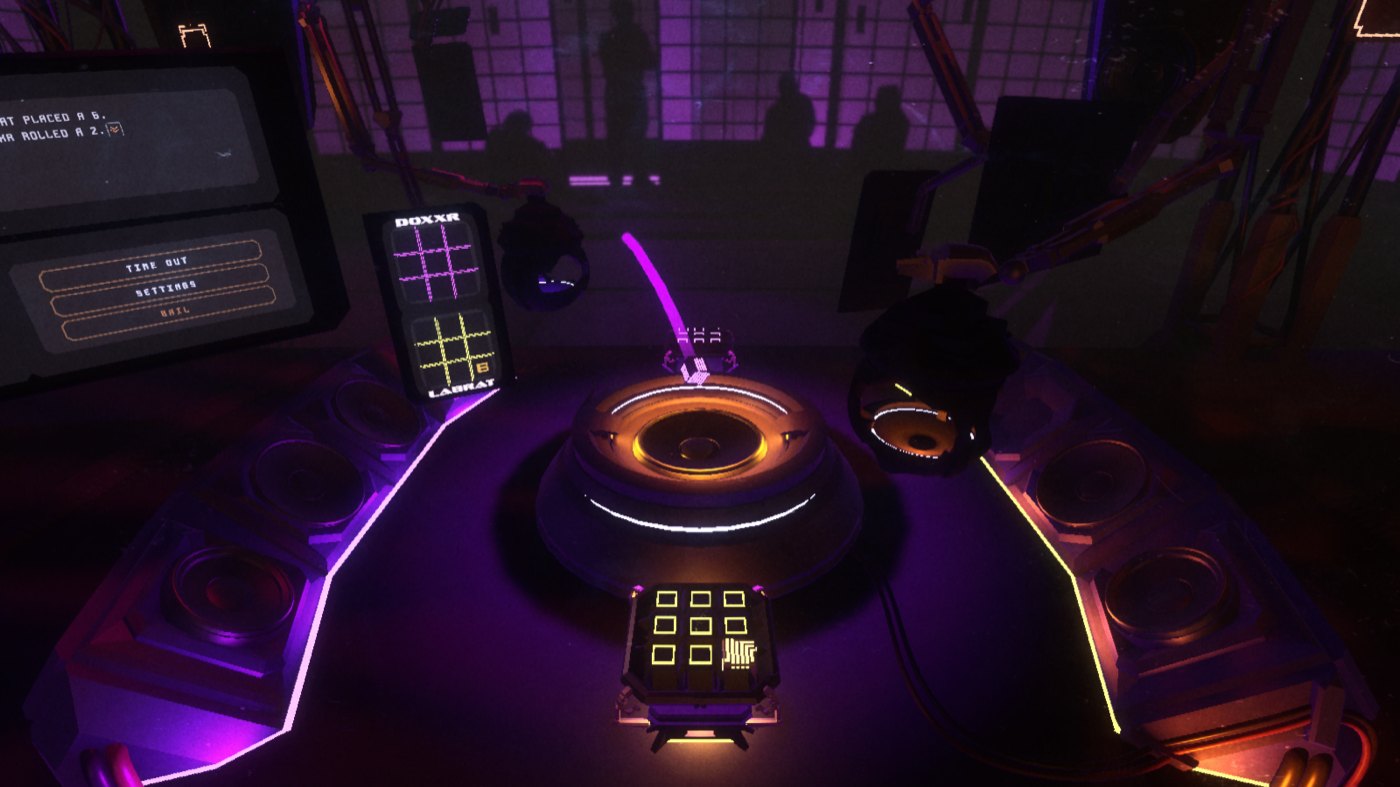
JINGI sets two players against each other over a 3×3 grid, throwing a die into an arena formed by a loudspeaker. The environment blends the visual language of the club and the underground with references to Japanese organized crime, gambling, and the ritual side of games of chance.
03 Technical Solution
The scene was built in the Unity engine using the URP render pipeline. The work was deliberately built around an immersive experience. The goal was not to invent new game mechanics or to achieve realistic graphics, but to create an authentic experience — to design a visual aesthetic and tie it to the audio so that the two act on the player as a single, strong whole.
This required a software architecture capable of adaptive audio that reacts to game states. The architecture was solved so that the graphic artist could work comfortably inside the Unity editor while the programmer and sound designer worked in their own development environments. This made simultaneous work possible, significantly accelerated development, and the clearly separated environments also defined the individual roles.
As a result, the sound design was not bound only to a timeline; it could fully exploit the context of the space and its changing parameters. Audio was implemented with the FMOD engine, which works with so-called events. These events are routed into groups and mixes. The FMOD project is then compiled into a binary sound bank, which Unity loads through a plugin.
The architecture allowed straightforward implementation of events, managed centrally through the state machine design pattern. Each state — for example StartGame — carries a set of parameters it passes to audio events and animations: it may attenuate the ambient layer or trigger the event that plays the StartGame sound.
Engine
Unity 6, URP render pipeline
Audio middleware
FMOD — events, groups/mixes, sound banks
Logic
C#, state machine driving audio + animation
Sound creation
Ableton Live — Drift synthesis + field recording
04 Sound Environment
The environment has its own deliberate aesthetic, which also opened space for its sonic composition. The sounds were created in Ableton Live (base edition), working primarily with the Drift synthesizer. No audio banks or samples were used. Because I wanted an authentic sonic signature, I chose synthesis, occasionally mixed with recorded and processed real-world sounds.
For recording I used a ZOOM H4n stereo recorder and a dynamic Shure SM7B for capturing "whoosh" sounds. Those were used mainly for the dynamic camera transitions, which serve less an aesthetic purpose than a practical one — helping the player stay oriented in space.
Creating the sound for the "claws" that serve the dice to the player was highly creative work: a mix of synthesis and a recorded power drill produced exactly the sound I had in mind. All the electronic devices, noises, and initialization beeps were variations of sounds generated with Drift. One particular challenge was designing the sound of the die landing on the loudspeaker so that it would resemble the resonance of a membrane.
After the final mix and master of the whole environment, I also mixed in an original soundtrack by Vilém Kalous, who composed a backing track specifically for this project.
05 Outcome & Roadmap
JINGI currently stands as a working prototype — a proof of concept and a clear direction for the production that follows. The prototype validated the core hypothesis: that pairing this aesthetic with a bespoke, synthesis-driven audio layer delivers a genuinely strong immersive experience — the kind that cannot be reached with stock samples and timeline-bound sound.
The next milestone is a public-facing demo, bringing the project to a wider audience. Beyond its product role, the prototype also functions as a pitch asset: a tangible demonstration of the concept used to secure funding for full development and production.