What started as a classic university research project on data and privacy soon grew into a developer’s passion. While studying how browsers handle cookies, sessions, and user tracking, I discovered a deeper question: how much of our digital attention still belongs to us? Watcher became my response — an experiment in building focus tools that respect human autonomy.
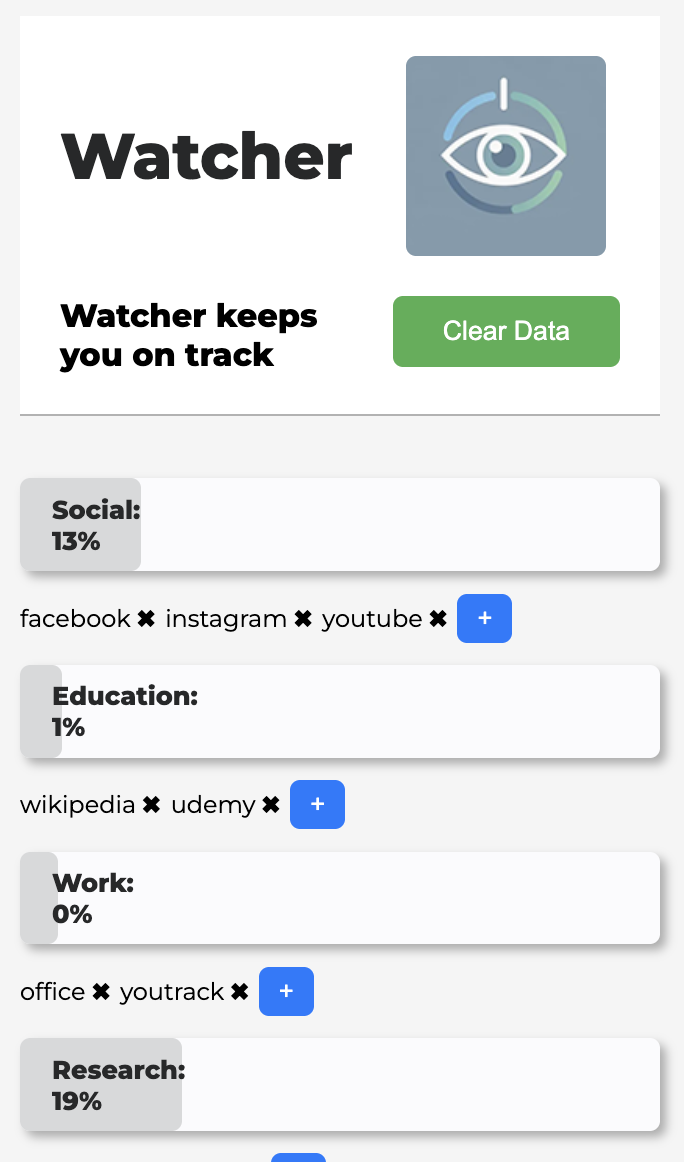
My curiosity led me deep into Chrome’s architecture — exploring DevTools, extension APIs, and the often-overlooked mechanisms of data collection. I realized how easily browser extensions can be misused, intentionally or not. That’s where the idea was born: create an extension that is useful, transparent, and absolutely free from exploitation.
Watcher doesn’t collect, send, or store any personal data. No analytics, no profiling, no hidden APIs. Everything stays local, on your device. This principle makes it especially valuable for researchers and journalists who need to read, analyze, and synthesize information from multiple sources without being tracked.
Built for qualitative research and long-form reading, Watcher helps maintain mental focus in the overwhelming noise of the web. It filters distractions, limits unnecessary connections, and provides a clean environment for exploring complex topics — keeping attention where it belongs: on thinking.
At its core, Watcher represents a belief that technology can still be ethical. It’s an open, minimalist browser extension designed to protect attention as a human right. Because real innovation doesn’t come from harvesting data — it comes from the quiet moments when we’re finally free to think.